The rules outside your kitchen while a Santa Clarita remodel runs
A remodel reaches past the kitchen: the hours the crew may work, the bin at the curb and the dust that drifts toward the neighbors. Each has a written rule, and which one applies turns on your address.
Checked September 22, 2026, at the codes and agency pages listed at the end.
Disclosure: this site makes introductions. It holds no contractor license and sets no prices. How this works
Short answer
Inside the city, work that needs a City building permit, on a site within 300 feet of residentially zoned property, may run 7 a.m. to 7 p.m. Monday to Friday and 8 a.m. to 6 p.m. Saturday, with no Sunday hours and six named holidays with no work. Unincorporated County addresses follow the County noise code instead. A bin in a City street needs an encroachment permit, and dust may not stay visible past the property line (Santa Clarita Municipal Code 11.44, Los Angeles County Code 12.08.440, Santa Clarita Municipal Code 13.06.010, South Coast AQMD Rule 403).
Stage 05 of 06, where this sits
The hours a permitted job may run in the city
The City's rule reads: "No person shall engage in any construction work which requires a building permit from the City on sites within three hundred (300) feet of a residentially zoned property except between the hours of seven a.m. to seven p.m., Monday through Friday, and eight a.m. to six p.m. on Saturday" (Santa Clarita Municipal Code 11.44).
The section allows only those two windows, so a covered job gets no Sunday hours. The City's own code enforcement answers say the same and cite the section (City code enforcement FAQ).
Whether your address follows the City or the County is on the city or county page. An association's own rules can add limits of their own; the small kitchen page covers how its review works.
Getting into a rented home to do the work has its own notice rule, set out on the Newhall page.
Get a written price
Free to you. The contractor calls to set a visit.
| Rule | Inside the city | Unincorporated County |
|---|---|---|
| Covers | Permitted work within 300 feet of residential zoning | Construction tool noise that disturbs across a property line |
| Weekdays | 7 a.m. to 7 p.m. | Not between 7 p.m. and 7 a.m. |
| Saturday | 8 a.m. to 6 p.m. | No hours set; noise caps apply |
| Sunday | None allowed | Not at any time |
| Holidays | Six named, no work | Not at any time |
Six holidays, emergency work and an after hours permit
The same section adds: "no work shall be performed on the following public holidays: New Year's Day, Independence Day, Thanksgiving, Christmas, Memorial Day and Labor Day" (Santa Clarita Municipal Code 11.44).
Emergency work is permitted at all times, but the code defines it narrowly: work to restore property to a safe condition after a public calamity, work to protect people or property from imminent danger, or utility work restoring service. Being urgent is not enough; the definition turns on a public calamity or imminent danger (Santa Clarita Municipal Code 11.44).
The Department of Community Development "may issue a permit for work to be done 'after hours'; provided, that containment of construction noises is provided." (Santa Clarita Municipal Code 11.44)
Work that needs no permit still has a noise rule
The hours above reach work that needs a building permit. A job that needs none is still under the City's general noise rule, which makes it unlawful to "willfully make or continue, or cause to be made and continued, any loud, unnecessary and unusual noise which disturbs the peace or quiet of any neighborhood" (Santa Clarita Municipal Code 11.44).
The City's code enforcement answers are also where a neighbor looks up how to report early or late work (City code enforcement FAQ).
Castaic, Stevenson Ranch and other unincorporated addresses
Outside city limits the County noise code applies. It prohibits "Operating or causing the operation of any tools or equipment used in construction, drilling, repair, alteration or demolition work between weekday hours of 7:00 p.m. and 7:00 a.m., or at any time on Sundays or holidays, such that the sound therefrom creates a noise disturbance across a residential or commercial real-property line" (Los Angeles County Code 12.08.440).
Two conditions sit in that sentence. The rule turns on a noise disturbance across a property line, which the chapter defines against its own noise standards, and it sets no Saturday hours, though the County's construction noise caps still apply that day. Emergency work of public service utilities and a variance from the health officer are the exceptions it names, and the chapter separately exempts emergency work (Los Angeles County Code 12.08.440).
Next in the sequence
Keep reading
A debris bin at the curb
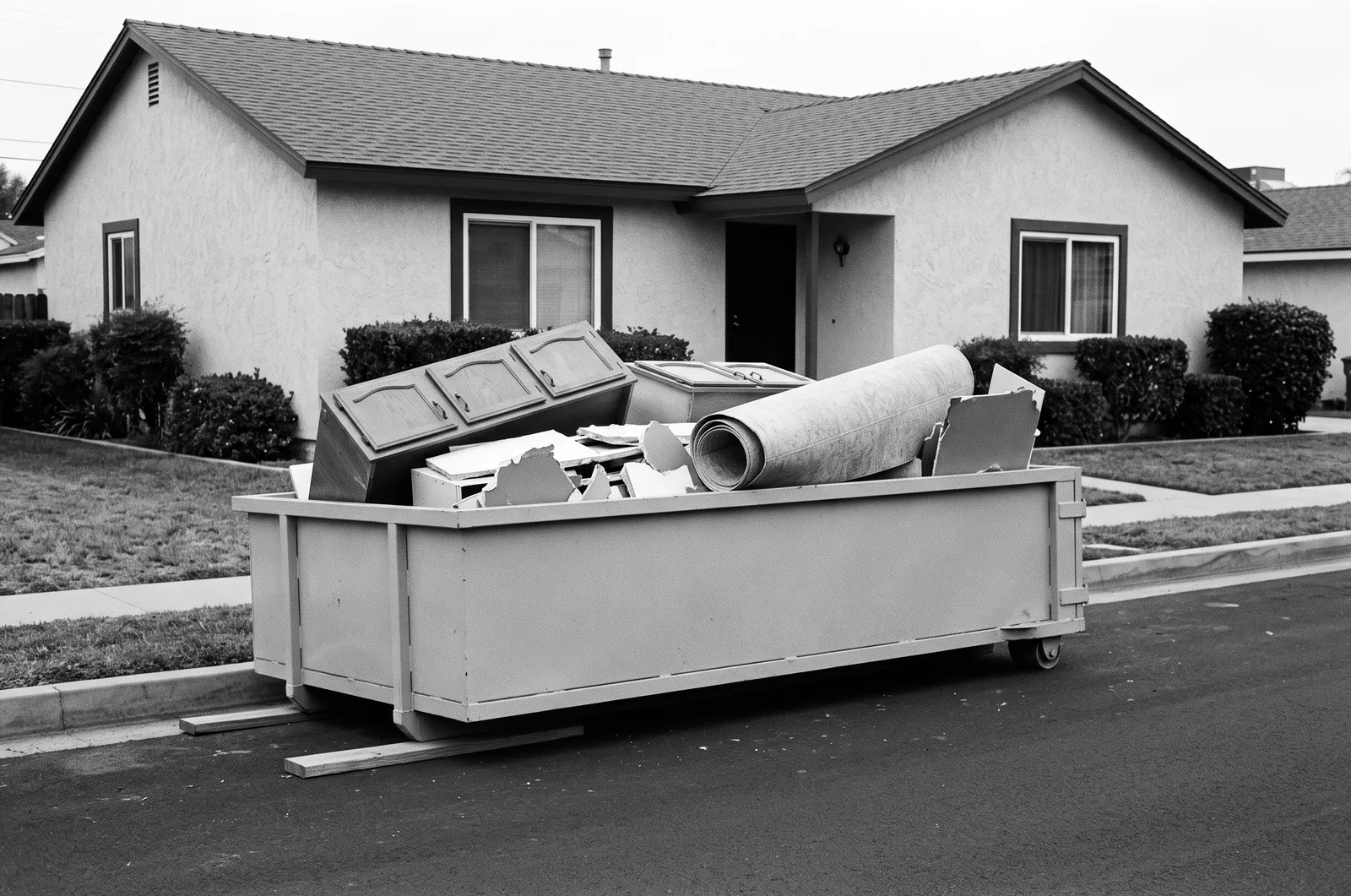
Inside the city, a permit from the Director is required before "Making or causing to be made any excavation or encroachment in any highway" (Santa Clarita Municipal Code 13.06.010). The definitions count "any structure or object of any kind or character" placed in the highway as an encroachment, and a highway means "any public highway, public street, public way or public place in the City," across the full width of the right of way (Santa Clarita Municipal Code 13.04).
The City's permit paperwork names the bin. Its requirements sheet says "Encroachment permits are required for all work or placement of objects within the public right-of-way" (City encroachment permit requirements), and its application lists "Roll-off Dumpster" as a type of work, with the waste hauler required (City encroachment permit application).
The bin itself has to come from a hauler the City has franchised: "All temporary bin and roll-off box services in the City of Santa Clarita are franchised" (City temporary bin page).
For an unincorporated address, County Public Works says a dumpster in front of the house needs an encroachment permit, good "for up to 7 consecutive days," from the permit field office serving the area (County Public Works dumpster FAQ).
Dust that drifts past the property line
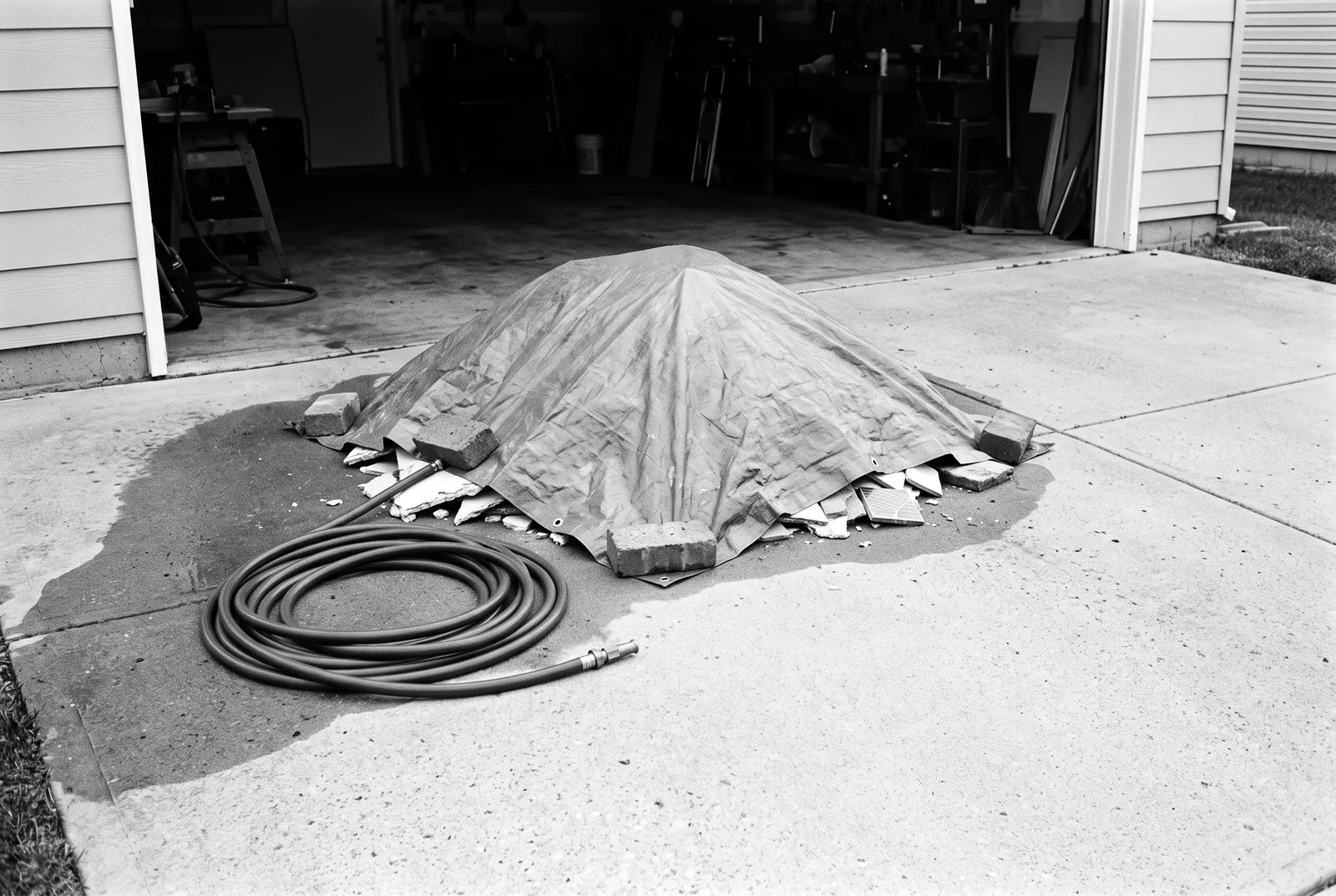
The air district's dust rule "shall apply to any activity or man-made condition capable of generating fugitive dust," and its definition of construction and demolition covers cutting and the alteration, rehabilitation, demolition or improvement of property (South Coast AQMD Rule 403).
The core limit is simple: no one may cause or allow dust from an active operation such that "the dust remains visible in the atmosphere beyond the property line of the emission source." The rule lists no exemption for a single home (South Coast AQMD Rule 403).
It is a rule about dust leaving the lot. Dust inside the house is outside what it regulates (South Coast AQMD Rule 403).
Asked when the crew shows up
Can a crew start at 6 a.m. in Santa Clarita?
Not on work that needs a City building permit, within 300 feet of residentially zoned property. The code allows 7 a.m. on weekdays and 8 a.m. on Saturday (Santa Clarita Municipal Code 11.44).
Can remodel work happen on a Sunday?
Not on a job the City hours cover: the section allows only weekday and Saturday windows, and the City's answers page says no construction on Sunday (City code enforcement FAQ). In unincorporated County, tool noise that disturbs across a property line is barred all day Sunday (Los Angeles County Code 12.08.440).
Who can bring the debris bin?
Inside the city, a hauler on the City's franchised list; the City page lists them (City temporary bin page).
Does the dust rule apply to a small kitchen job?
The air district rule applies to any activity capable of generating fugitive dust and lists no exemption for a single home. Its limit is dust that stays visible past the property line (South Coast AQMD Rule 403).
Sources
Every rule on this page was read in the City code, County code, agency page or air district rule that states it, in September 2026. City rules reach addresses inside city limits; County rules reach unincorporated addresses.
- 1Santa Clarita Municipal Code Chapter 11.44, Noise Limits (eCode360)
- 2City of Santa Clarita, Community Preservation, code enforcement frequently asked questions
- 3Los Angeles County Code Chapter 12.08, Noise Control, section 12.08.440 (Municode)
- 4Santa Clarita Municipal Code Chapter 13.06, encroachment and excavation permits (eCode360)
- 5Santa Clarita Municipal Code Chapter 13.04, definitions (eCode360)
- 6City of Santa Clarita Engineering Services, Encroachment Permit Requirements, updated July 2025 (PDF)
- 7City of Santa Clarita Engineering Services, Non Utility Encroachment Permit Application (Word document)
- 8City of Santa Clarita Environmental Services, temporary and roll off bins
- 9Los Angeles County Public Works, frequently asked question on placing a dumpster in front of a house
- 10South Coast Air Quality Management District Rule 403, Fugitive Dust, amended June 3, 2005 (PDF)