Which kitchen rules are state code, and which the City of Santa Clarita wrote
Most of what governs a kitchen here is California code enforced the same way statewide. A short list is the City's own writing, and that short list is where a job goes sideways.
Updated September 2026. Every rule checked at its own source, listed at the end.
Disclosure: this site makes introductions. It holds no contractor license and sets no prices. How this works
Short answer
For permit applications received on or after January 1, 2026 the City enforces the 2025 California codes with its own amendments, and an earlier application stays on the 2022 codes within its time limits. The state code brings arc fault protection to a dwelling kitchen circuit and puts a load calculation, rather than a fixed panel size, behind any panel question. The City adds a drywall inspection before taping, a ban on self regenerating water softeners, a doubled fee for starting early, and a placard that goes up before work does (Santa Clarita Building Code).
Stage 04 of 06, where this sits
Which code edition your kitchen is on
The City enforces the 2025 California building codes, with City amendments, for permit applications received on or after January 1, 2026. An application received before that date stays on the 2022 codes, within its own time limits (Santa Clarita Building Code).
The adoptions are spread across the municipal code instead of gathered in one chapter: building at 18.01.010, electrical at 19.01.010, plumbing at 20.01.010, mechanical at 21.01.010, energy at 24.01.010 and CALGreen at 25.01.010. The Fire Code took effect on January 1, 2026 without the application date wording the others carry (Santa Clarita Building Code).
One practical effect for anyone reading older advice. A citation to a 2022 section is superseded. The figure inside it may well have survived the update unchanged, so the right move is to recheck it at the 2025 text before assuming it is wrong (Santa Clarita Building Code).
The City also publishes design criteria a kitchen mostly never meets: rainfall at 3 inches per hour, Climate Zone 9 or 16 as applicable, and a seismic category worked out per site. A kitchen reaches them only when the work turns structural, changes roof drainage or opens the building envelope (City of Santa Clarita building codes and design criteria).
Get a written price
Free to you. The contractor calls to set a visit.
Who wrote the rule
Sorting the rules by author is more useful than sorting them by subject, because it tells you who to ask and what changes when you cross the city line. A state rule travels with the address. A City amendment stops at city limits, and the same kitchen in Castaic answers to the County instead (Santa Clarita Building Code).
Continued: check whether your address is city or county| Rule | Written by | When it reaches a kitchen |
|---|---|---|
| Arc fault protection on dwelling kitchen circuits, 120 volts, 10 to 20 amps | State, 2025 California Electrical Code 210.12 | Any kitchen circuit, including a modified or extended one, with limited exceptions |
| No fixed panel size for a kitchen | State, load calculation under the Electrical Code | The calculation, the panel space and the panel condition are what decide |
| Sealed plans and a matching load calculation | City bulletin, revised December 2018 | A single family panel upgrade with a new bus rating of 400 amps or larger |
| Drywall inspection before taping | City amendment, SCMC 18.02.130 | Any permitted work that hangs or replaces drywall |
| Self regenerating salt or potassium chloride softener ban | City amendment, SCMC 20.04.020 | Any softener sending brine to the sewer |
| Twice the permit fee for starting early | City amendment, SCMC 18.02.110 | Permit required work begun before the permit issues |
| Construction placard posted before work starts | City amendment, SCMC 18.02.150 | All permit required work, until final approval |
| CALGreen mandatory measures | State, CALGreen 301.1.1 | Only where the work adds conditioned area, volume or size, and only inside it |
| Whole house fixture replacement before final approval | State, Civil Code 1101.4 | A single family home built and available for use on or before January 1, 1994 |
Electrical: what the state asks, and what the panel decides
Arc fault protection comes from the state, and every California city enforces it. Under the 2025 California Electrical Code, dwelling kitchen circuits at 120 volts and 10 to 20 amps need arc fault protection, and that reaches a modified or extended circuit as well as a new one, with limited exceptions. One of those exceptions covers an extension of up to 1.8 m, about 6 feet, where no outlet is added (the 2025 California Electrical Code, Section 210.12).
No City code makes a kitchen remodel by itself require a 200 amp service. A load calculation, the space left in the panel and the condition of the panel are what decide, and for an alteration the existing load has to be shown. A remodel can still end in a panel upgrade; it does not start with one (Santa Clarita Building Code, SCMC 19.03.100).
Above a line the City does set, the paperwork changes. A single family panel upgrade with a new bus rating of 400 amps or larger needs sealed plans, meaning a site plan, a floor plan, a single line diagram and panel schedules, in two copies on 11 by 17 inch sheets, sealed by a licensed electrical engineer or by the C-10 contractor doing the work, with a load calculation that matches the plans (the City panel upgrade bulletin).
Read that bulletin with its date attached. It was revised in December 2018 and it says a residential electrical service change or upgrade goes to a C-10 contractor only. Whether that line survives alongside the state owner builder route is not something the City restates anywhere current, so confirm it with Building and Safety before planning around either answer (City of Santa Clarita panel upgrade bulletin).
Continued: appliances, circuits and the panel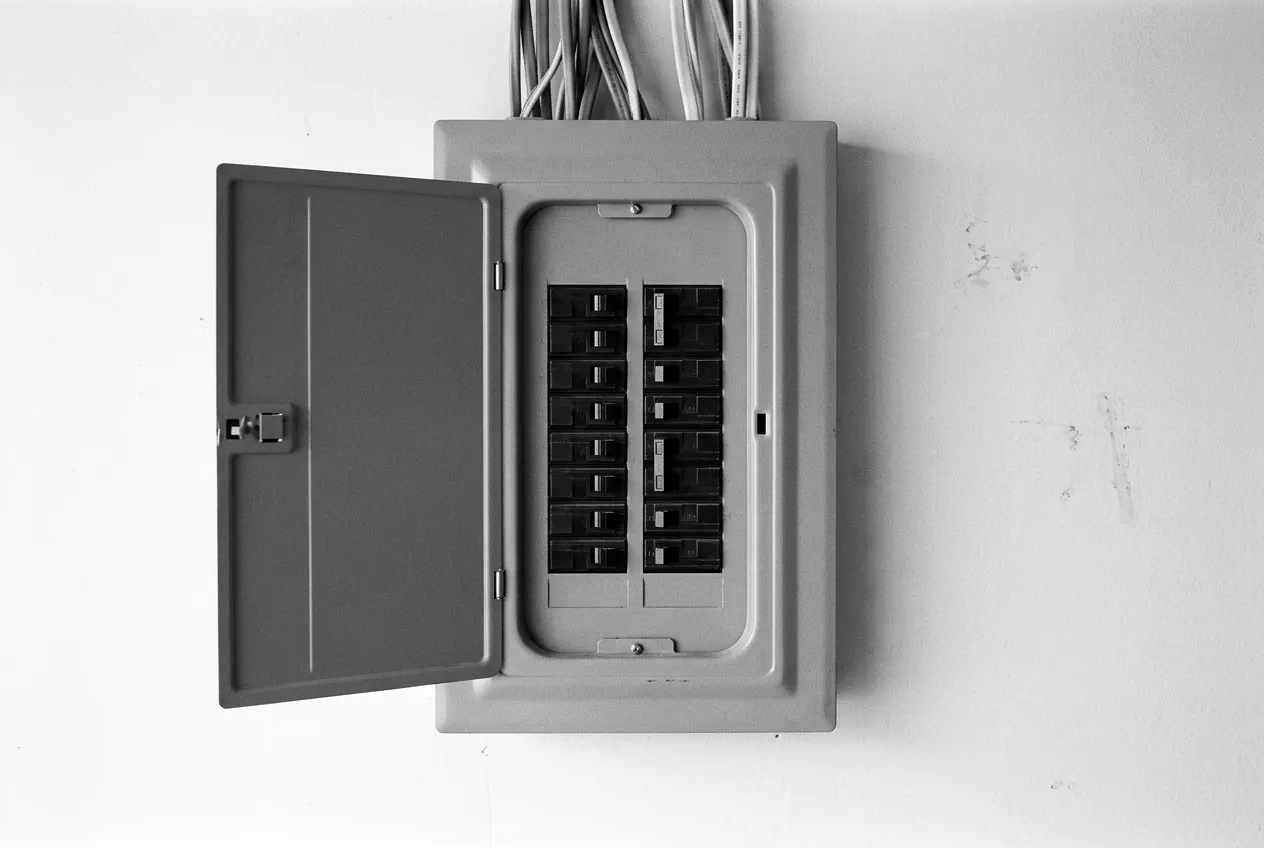
The City amendments a kitchen actually hits
Drywall. Permitted work that hangs or replaces drywall needs a drywall inspection before taping, and that holds outside fire rated and shear walls too, because SCMC 18.02.130 deletes the exception the state code carries. A non rated repair up to 200 square feet needs no permit in the first place (Santa Clarita Building Code, SCMC 18.02.130).
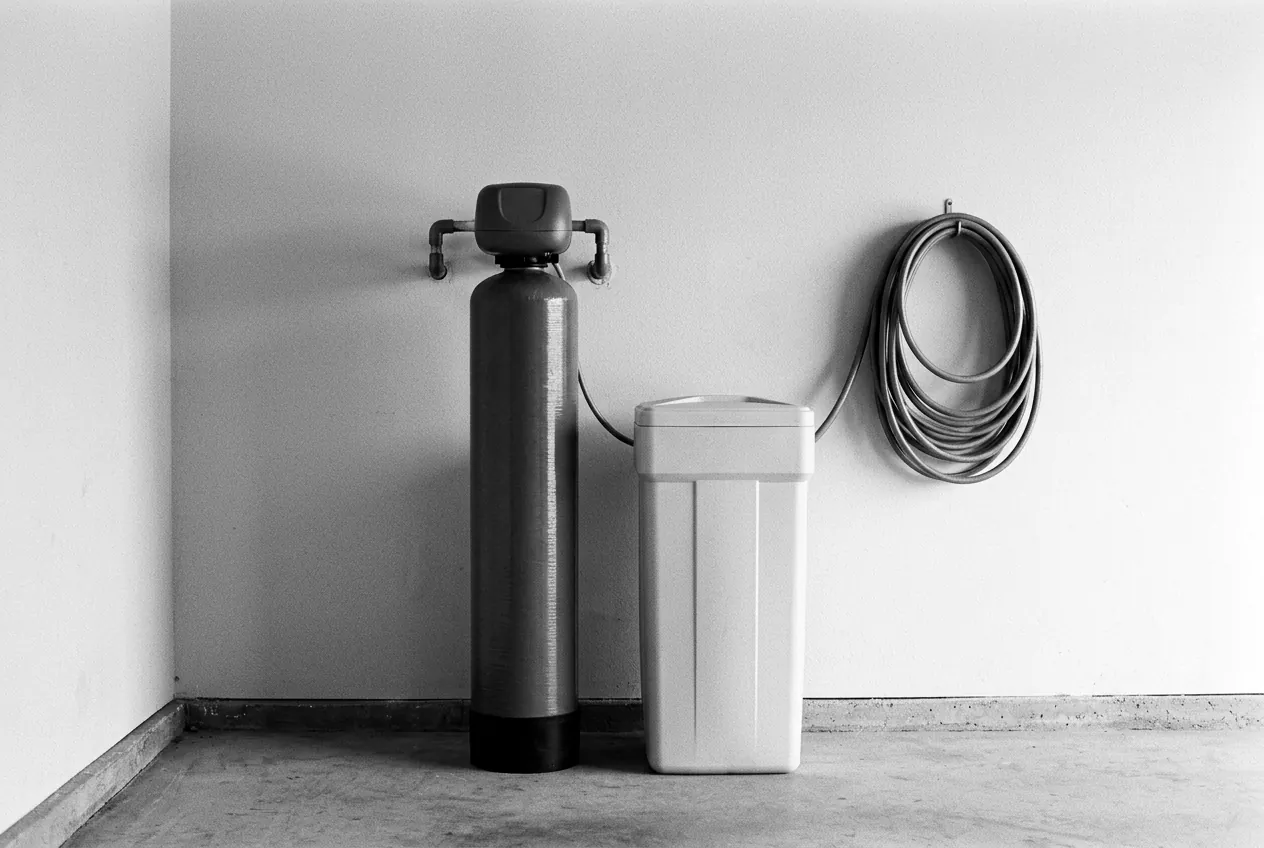
Water treatment. Automatic or self regenerating salt or potassium chloride softeners are banned in the City. Commercial portable exchange tanks that send no brine to the sewer are allowed, and so are salt free systems approved by the Sanitation District. The valley ban dates to 2003, and Measure S in 2008 required removal of existing units discharging to the sewer (Santa Clarita Building Code, SCMC 20.04.020).
Starting early. Beginning permit required work before the permit issues adds a fee of twice the permit fee, on top of the permit fee, owed whether or not a permit issues, adjustable by the Building Official (Santa Clarita Building Code).
The placard. Permit required work cannot start until the construction placard is posted, and it stays up until final approval, with the signed card allowing up to 10 working days of temporary occupancy (Santa Clarita Building Code).
One more worth knowing before the inspector arrives. A reinspection fee may be charged where work is not ready, corrections have not been made, plans are missing, access fails or the work deviates from the plans, and further inspection waits until it is paid. The code says may, and it publishes no dollar figure for it (Santa Clarita Building Code, SCMC 18.02.140).
Continued: what triggers a permit in the first place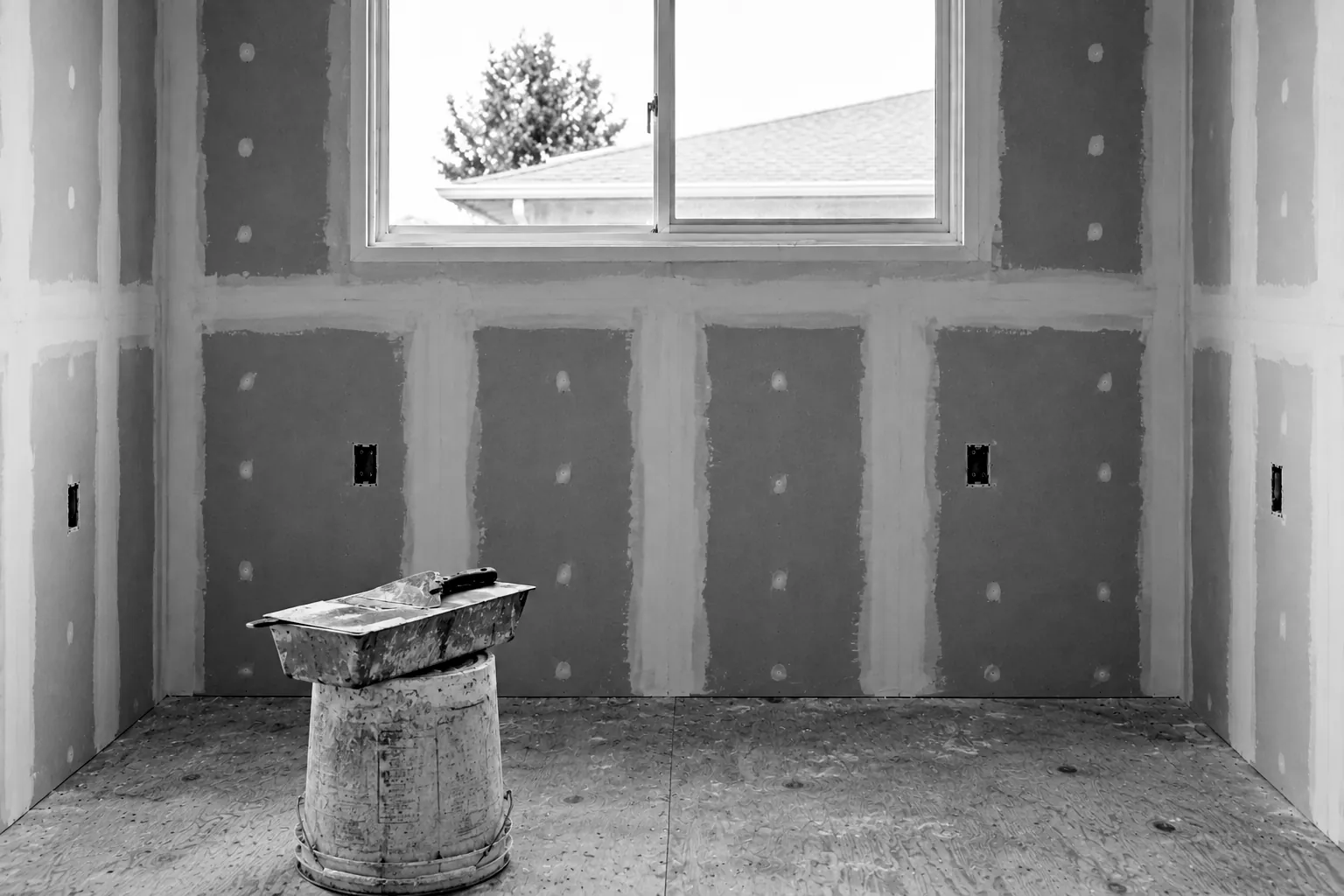
When CALGreen reaches a kitchen, and when it does not
The City's CALGreen handout applies the mandatory measures to a home remodel only where the work adds conditioned area, conditioned volume or size, and then only inside that area. Raising a ceiling counts. Converting garage space counts. Tier 1 and Tier 2 are voluntary in Santa Clarita, and the energy rules run on their own terms regardless (the City CALGreen residential handout).
So a kitchen that stays inside its existing walls and volume often does not trigger the mandatory measures at all, which is the half of this rule that remodeling websites leave out (City of Santa Clarita CALGreen residential handout).
Where it does apply, the fixture numbers are specific. A kitchen faucet must default to 1.8 gallons per minute at 60 psi, and a temporary increase to 2.2 gallons per minute at 60 psi is allowed. Alongside it: water closets at 1.28 gallons per flush, showerheads at 1.8 gallons per minute at 80 psi, and a lavatory faucet between 0.8 gallons per minute at 20 psi and 1.2 gallons per minute at 60 psi (the state CALGreen residential guide).
Houses built by 1994, and the fixtures in the rest of the house
This one reaches past the kitchen. For a single family home built and available for use on or before January 1, 1994, California Civil Code 1101.4 requires noncompliant plumbing fixtures throughout the house to be replaced before final permit approval, unless an exemption applies (California Civil Code 1101.4).
Noncompliant has a definition: a toilet using more than 1.6 gallons per flush, a urinal using more than 1 gallon per flush, a showerhead rated by its manufacturer above 2.5 gallons per minute, or an interior faucet above 2.2 gallons per minute (California Civil Code 1101.4).
The two figures that circulate with this rule, $150,000 and 10 percent, belong to a different subsection covering multifamily and commercial property. For a pre-1994 single family home there is no cost threshold and no room limit, so the size of the kitchen job does not switch the requirement on or off (California Civil Code 1101.4).
The City tells applicants it applies. Its public notices page says Senate Bill 407 "requires a building permit applicant to replace all noncompliant plumbing fixtures in properties built and available for use on or before January 1, 1994, with water-conserving plumbing fixtures as a condition for approval of a final building permit for building alterations or improvements" (City of Santa Clarita public notices page). Section 1101.9 exempts a jurisdiction with its own pre July 2009 retrofit ordinance; for an address on the County side of the line, ask LA County Building and Safety (California Civil Code 1101.4).
The Valencia page shows how that date falls between the two ZIP areas of one community.
Continued: older kitchens and what demolition finds
Next in the sequence
Keep reading
The four code questions
Does a kitchen remodel need a 200 amp panel in Santa Clarita?
No City code says so. What decides is an electrical load calculation, how much space is left in the panel and what condition the panel is in, and for an alteration the existing load has to be shown. A remodel can still finish with a panel upgrade, and plenty do, which is a different statement from the remodel requiring one. If an upgrade does happen and its new bus rating is 400 amps or larger, the City asks for sealed plans, meaning a site plan, a floor plan, a single line diagram and panel schedules, with a load calculation that matches them (Santa Clarita Building Code, City of Santa Clarita panel upgrade bulletin).
We are only extending one circuit. Do the arc fault rules still apply?
Under the 2025 California Electrical Code, which every California city enforces the same way, arc fault protection reaches a modified or extended circuit in a dwelling kitchen as well as a new one, on circuits at 120 volts and 10 to 20 amps. There are limited exceptions and one of them covers an extension of up to 1.8 m, about 6 feet, where no outlet is added. Beyond that exception, extending the circuit brings the requirement with it (2025 California Electrical Code).
Our house is from 1985. Does the whole house really have to be re-plumbed?
Not re-plumbed, but the fixtures are in scope and this rule reaches past the kitchen. California Civil Code 1101.4 requires a single family home built and available for use on or before January 1, 1994 to have noncompliant plumbing fixtures replaced throughout the house before final permit approval, unless an exemption applies. Noncompliant means a toilet over 1.6 gallons per flush, a urinal over 1 gallon per flush, a showerhead rated above 2.5 gallons per minute, or an interior faucet above 2.2 gallons per minute. The City's own public notices page tells permit applicants the rule applies (City of Santa Clarita public notices page), so budget for it; for an address in unincorporated county, ask LA County Building and Safety (California Civil Code 1101.4).
Can we put a water softener in with the kitchen?
Not an automatic or self regenerating one using salt or potassium chloride. Those are banned in the City of Santa Clarita, a ban that goes back to 2003 across the valley and that Measure S in 2008 extended to removal of existing units discharging to the sewer. Two routes stay open: a commercial portable exchange tank that sends no brine to the sewer, and a salt free system approved by the Sanitation District. It is worth raising early, because the plumbing for it gets decided at the same time as the kitchen (Santa Clarita Building Code).
Sources
Every rule on this page was read at the document that states it, in September 2026, rather than taken from another remodeling website. City rules and City fees cover addresses inside Santa Clarita city limits.
- 1Santa Clarita Building Code, 2025 edition (SCMC Titles 18 to 25), City of Santa Clarita
- 2Building codes and design criteria, City of Santa Clarita Building and Safety
- 32025 California Electrical Code, California Building Standards Commission
- 4Residential electrical service change bulletin, revised December 2018, City of Santa Clarita
- 5CALGreen 2025 residential handout, effective January 1, 2026, City of Santa Clarita
- 6CALGreen residential guide, California Department of Housing and Community Development
- 7California Civil Code Section 1101.4
- 8Public notices, City of Santa Clarita Building and Safety
- 9Building and Safety division, City of Santa Clarita