What California asks of the shop that cuts a Santa Clarita countertop
Quartz, granite and porcelain tops are cut from slabs in a fabrication shop. State law changed the rules for that work on January 1, 2026, and a stricter rule is in draft. This page sets out both, with dates, and leaves the choice of stone to you.
Checked September 22, 2026. The draft rule in the last station is proposed and gets rechecked as it moves.
Disclosure: this site makes introductions. It holds no contractor license and sets no prices. How this works
Short answer
The rules below govern the people who cut the slab. Under SB 20, in effect since January 1, 2026, cutting engineered stone, or natural stone above 10 percent silica, has to be done wet. From July 1, 2026, each fabrication shop also files a yearly attestation that its cutters are trained. A draft rule to prohibit fabricating engineered stone above 1.0 percent silica was posted September 16, 2026. It is proposed, not adopted (SB 20 as chaptered, Cal/OSHA draft standard page).
Stage 03 of 06, where this sits
Quartz still leads the national survey, by a smaller margin
In the 2026 Houzz study, "Engineered quartz continues to be the most frequently chosen countertop material (32%), though its share dropped notably by 7 percentage points year over year." Granite was 15 percent, down 4, and quartzite 10 percent (2026 Houzz Kitchen Trends Study).
Those are national shares among Houzz users upgrading countertops in a completed, current or planned kitchen renovation, from an online survey of 1,780 users taken July 6 to 30, 2025. The study gives no reason for the drop, and this page does not supply one (2026 Houzz Kitchen Trends Study).
Whether a new countertop needs a City building permit is on the permit page. This page covers the rules on how the slab is cut.
Get a written price
Free to you. The contractor calls to set a visit.
Engineered quartz is artificial stone in state law
SB 20 defines artificial stone as "any reconstituted, artificial, synthetic, composite, engineered, or manufactured stone product," commonly natural stone or other silica materials bound with resins or polymers into a slab (SB 20 as chaptered). The Cal/OSHA standard uses the same definition (8 CCR 5204).
The same sentence draws a line: "Fired ceramic and porcelain tiles and panels are not artificial stone." That places porcelain outside the definition. It says nothing about how much silica a porcelain panel holds (SB 20 as chaptered).
Natural stone has its own threshold. Cutting, grinding or polishing counts as a high exposure trigger task on artificial stone above 0.1 percent crystalline silica by weight, and on "other silica containing products, including natural stone, that contain more than 10 percent by weight crystalline silica," when the work is fabricating countertops, backsplashes, walls, flooring or other products from slabs or panels, and cleaning up the dust (SB 20 as chaptered).
Tile backsplashes, and the outlet boxes behind them, are on the flooring and backsplash page.
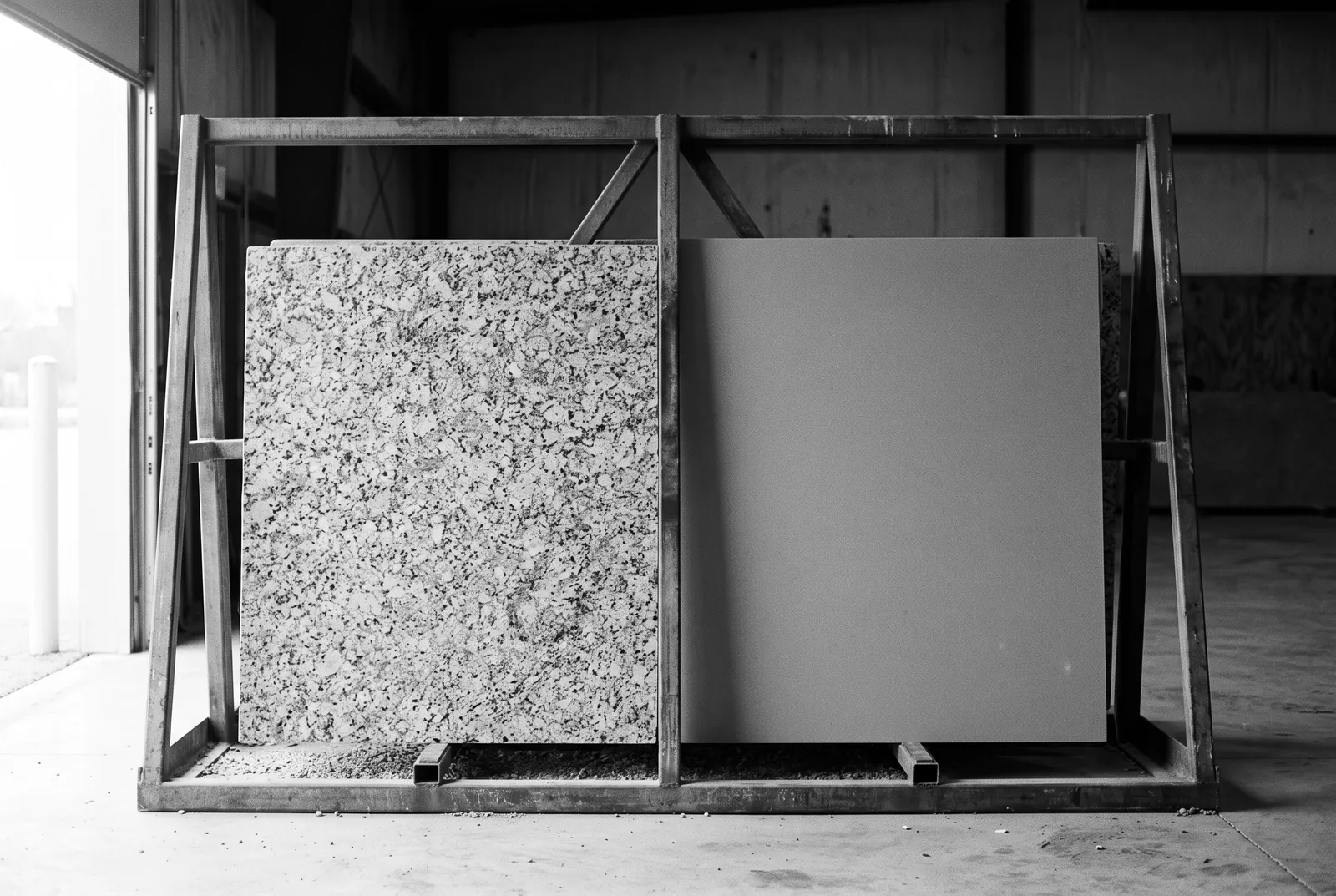
| Slab | Artificial stone in state law | Cutting it is a trigger task |
|---|---|---|
| Engineered quartz and other engineered stone | Yes, by definition | Above 0.1 percent silica |
| Granite and other natural stone | No | Above 10 percent silica |
| Porcelain and fired ceramic panels | No, excluded by name | As another silica product above 10 percent |
Why the Legislature acted: the state's silicosis count
The Department of Public Health reported that "As of November 13, 2025," it had "confirmed 432 silicosis cases among California countertop workers since 2019, including at least 25 deaths and 48 lung transplants." Los Angeles County had 226 of them. The department says the counts likely underestimate the true burden, and silicosis became a reportable disease in California in June 2025 (California Department of Public Health advisory).
In SB 20's findings, the Legislature notes that physicians at Olive View UCLA Medical Center identified a cluster of silicosis among San Fernando Valley stonecutters working on synthetic stone countertops. It cites a state directory listing "over 100 stone slab fabrication shops in the center's catchment area in the San Fernando Valley and over 1,000 within the state" (SB 20 as chaptered).
The same law adds that "'Serious injury or illness' includes silicosis and silica-related lung cancer," and has the department report silicosis linked to work with artificial stone to Cal/OSHA within three business days, which starts an investigation (SB 20 as chaptered).
Dry cutting is against state law
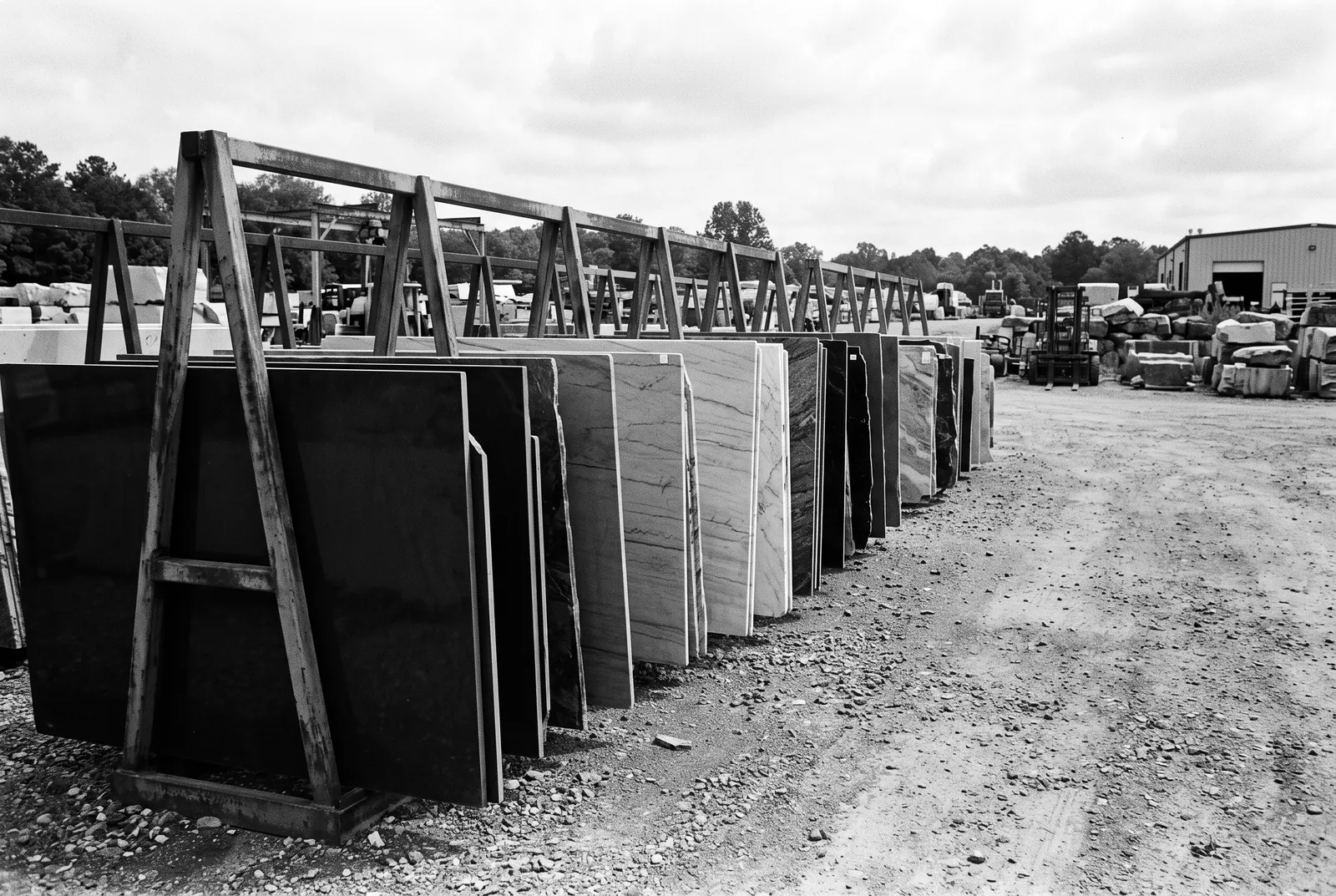
SB 20, in effect since January 1, 2026, says "A person or entity engaged in high-exposure trigger tasks shall not use dry methods" and must use effective wet methods. A violation is grounds for an immediate Cal/OSHA order stopping the work (SB 20 as chaptered).
Wet methods have to keep dust under the action level "at any time," and "water shall cover the entire surface of the work object" where the tool touches it: a constant, continuous flow of running water, cutting under water, or water jet cutting. Recycled water has to be filtered first (SB 20 as chaptered).
The Cal/OSHA standard adds the shop rules. Wet methods are required regardless of air test results. Dry sweeping and compressed air on silica dust are banned, and so is rotating workers to lower each one's exposure. Every trigger task happens inside a regulated area. Cutters wear a powered air purifying respirator, full face or helmet or hood, rated to a protection factor of 1000, or equal protection; lower rated respirators are allowed only where regular air sampling keeps exposure under the action level, among other conditions (8 CCR 5204).
Those shop rules were filed as an emergency rule on December 29, 2023 and made permanent effective February 5, 2025 (Cal/OSHA silica standard, 8 CCR 5204).
A yearly training attestation, starting July 1, 2026
The owner or operator of a fabrication shop, or anyone who employs workers to do trigger tasks in one, has to make sure each of those workers is trained under the Cal/OSHA standard. Then, "Beginning on July 1, 2026, and annually thereafter," they file with Cal/OSHA electronically "a written attestation that each employee who performs high-exposure trigger tasks has received training" (SB 20 as chaptered). A false attestation is unlawful.
The law calls it an attestation. The statute creates no license or certificate for the shop and describes no public lookup of the filings (SB 20 as chaptered).
Next in the sequence
Keep reading
The shop standard, and the work in your kitchen
The Cal/OSHA standard in section 5204 is the general industry rule. It applies to "all occupational exposures to respirable crystalline silica, except: (A) Construction work covered under Section 1532.3" (8 CCR 5204).
Section 5204 does not mention installation, and this page does not summarize section 1532.3. The dry cutting ban in SB 20 is written for "A person or entity engaged in high-exposure trigger tasks" and does not limit itself to a shop (SB 20 as chaptered).
A draft ban on engineered stone above 1.0 percent silica
On May 21, 2026, the Standards Board voted unanimously to grant a petition "initiating the process" toward a prohibition on artificial stone above 1 percent crystalline silica, and asked Cal/OSHA to prepare a finding of emergency to support expedited rulemaking (DIR News Release 2026-45).
On September 16, 2026, Cal/OSHA posted a discussion draft of a new section 5204.1 (Cal/OSHA draft standard page). It reads: "the manufacture or fabrication of artificial stone containing more than 1.0% crystalline silica by weight is strictly prohibited in any place of employment," starting 60 days after an emergency rule takes effect. It would reach fabrication on site too, but "does not apply to onsite installation, maintenance, or repair of artificial stone products" (Cal/OSHA discussion draft, section 5204.1).
A limited exception would let an employer that fully complies with section 5204 finish stone it bought, contracted for or had on hand, with no fabrication at all after 180 days. Comments close September 30, 2026 (Cal/OSHA discussion draft, section 5204.1, Cal/OSHA draft standard page).
Status on September 22, 2026: proposed, not adopted. No effective date is set, and this page does not predict one. The table below is dated so you can see where it stood when read.
| Date | Step | Posted by |
|---|---|---|
| May 21, 2026 | Standards Board votes to start the process | DIR News Release 2026-45 |
| September 16, 2026 | Discussion draft of section 5204.1 posted for comment | Cal/OSHA |
| September 30, 2026 | Comment period closes | Cal/OSHA |
| Not set | Adoption and an effective date | Proposed, not adopted |
Asked about quartz, granite and the draft rule
Is quartz banned in California?
Not as of September 22, 2026. A Cal/OSHA discussion draft would prohibit fabricating artificial stone above 1.0 percent crystalline silica in any workplace; it is posted for comment and has not been adopted (Cal/OSHA draft standard page).
When would the draft ban take effect?
The draft sets no calendar date. It would start 60 days after an emergency rule takes effect, and a limited exception for stone an employer already bought or had on hand would end all fabrication 180 days after (Cal/OSHA discussion draft, section 5204.1).
Do the cutting rules cover granite?
Yes, when the stone holds more than 10 percent crystalline silica by weight and the work is fabricating a countertop or similar product from a slab (SB 20 as chaptered).
Where does porcelain fit?
SB 20 says fired ceramic and porcelain tiles and panels are not artificial stone. Cutting a porcelain panel can still be a trigger task if it is a silica product above 10 percent. This page makes no claim about any panel's silica content (SB 20 as chaptered).
Sources
Every rule, date and count on this page was read in the statute, regulation, draft or agency page that states it, in September 2026. The page names no brand, maker or fabricator and gives no silica figure for any product.
- 12026 U.S. Houzz Kitchen Trends Study, Houzz (PDF), survey of 1,780 Houzz users
- 2Senate Bill 20 (Stats. 2025, ch. 734), chaptered text, California Legislative Information
- 3California Code of Regulations, title 8, section 5204, respirable crystalline silica
- 4California Department of Public Health, CAHAN health advisory on silicosis, November 17, 2025
- 5Department of Industrial Relations, News Release 2026-45, May 22, 2026
- 6Cal/OSHA discussion draft of section 5204.1 (Word document)
- 7Cal/OSHA advisory page, prohibition of fabrication of artificial stone over 1.0% silica