How a kitchen remodel shows up on a Santa Clarita tax bill and at the sale
The published resale percentages, and the 30 percent rule, are on the cost page. This page follows a finished kitchen onto two pieces of paper: the property tax bill and the disclosure statement a seller gives the buyer.
Updated September 2026. Every rule checked at its own source, listed at the end.
Disclosure: this site makes introductions. It holds no contractor license and sets no prices. How this works
Short answer
A kitchen remodel reaches a home's Proposition 13 base value only as new construction, and the LA County Assessor reviews each permit on its own. Its guide lists replacing cabinets, countertops or built in appliances with items of similar quality as not assessable, and upgraded finishes or a changed floor plan as assessable. At a sale, the State's disclosure form asks the seller about alterations "made without necessary permits." (LA County Assessor, New Construction, Remodeling, Repair, SB 1371 of 2020, pages 34 to 38)
Stage 02 of 06, where this sits
What the Assessor counts as new construction
Since Proposition 13 of 1978, a California home's property tax starts from a base value that is reset by three kinds of event. The Constitution sets that base at the appraised value "when purchased, newly constructed, or a change in ownership has occurred," and in between lets it rise with inflation by no more than 2 percent a year, or be reduced when the property loses value (California Constitution, Article XIII A, section 2).
A remodel can only reach that base as new construction, and the Revenue and Taxation Code draws the line. New construction includes any addition to the property, and any alteration that is a major rehabilitation or converts it to a different use. A renovation is a major rehabilitation when it makes an improvement "the substantial equivalent of a new improvement or fixture" (California Revenue and Taxation Code 70).
The LA County Assessor publishes a guide for remodels, set out in the table below, and adds that "each project and property is unique, so the Assessor reviews each permit and property project individually" (LA County Assessor, New Construction, Remodeling, Repair). The State Board of Equalization puts the kitchen test plainly: "If, in the opinion of the county assessor, the kitchen is now the equivalent of a new kitchen, the alterations can be considered new construction" (State Board of Equalization, New Construction).
The State's handbook for assessors says items that are not assessable one by one, such as replacing kitchen cabinets or appliances, can still add up: "in combination or collectively they may constitute major rehabilitation." The assessor decides that case by case (BOE Assessors' Handbook Section 410).
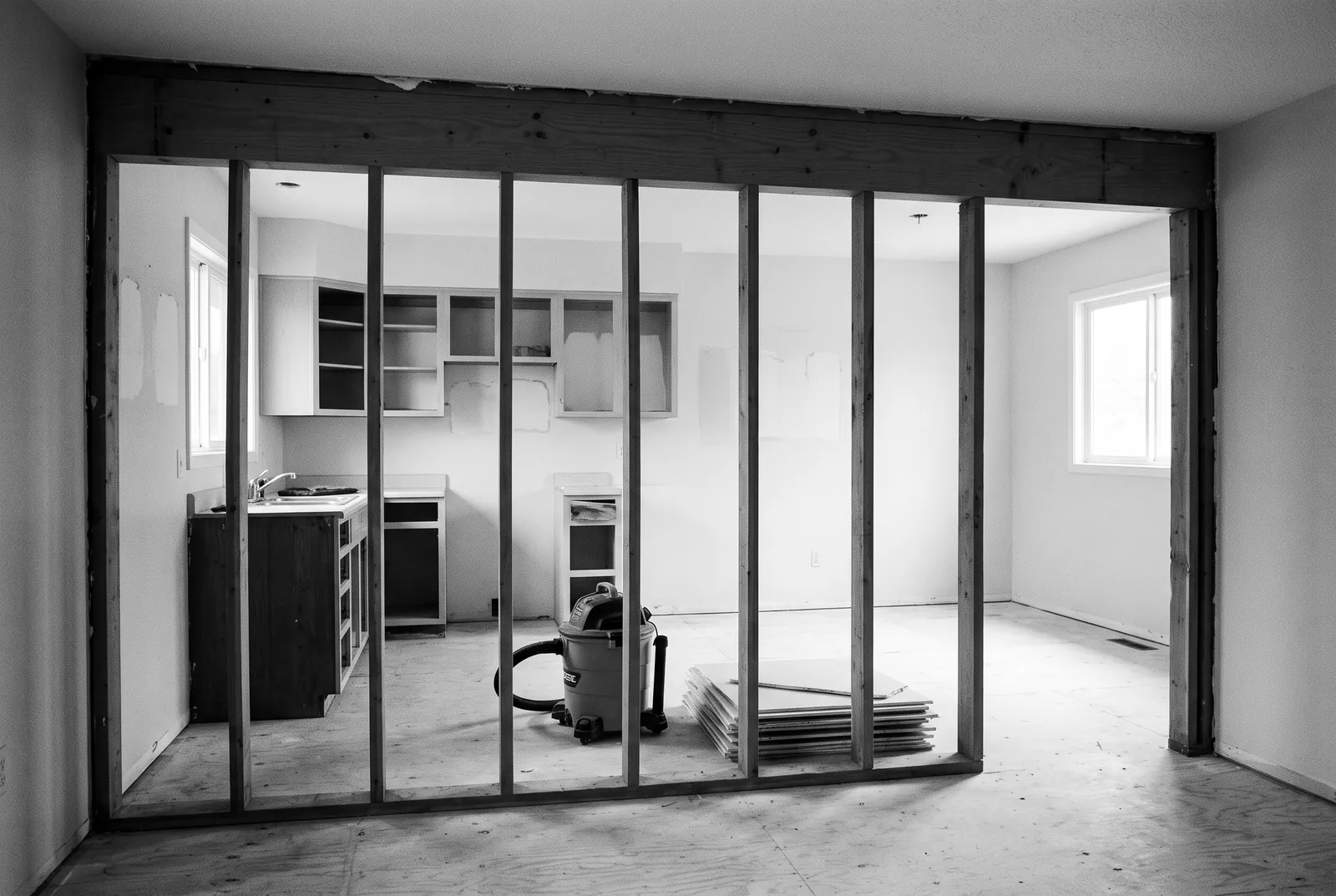
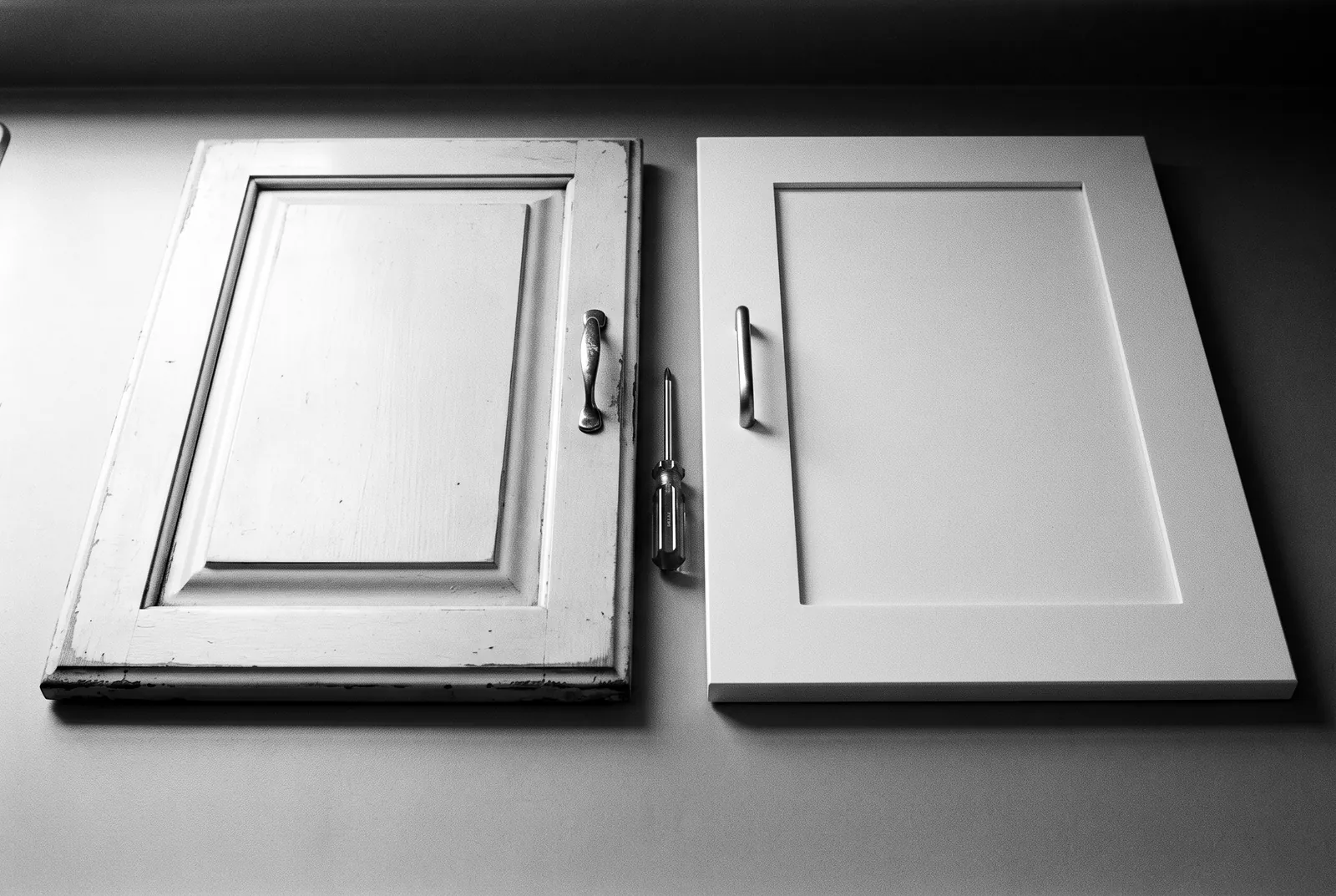
| What the job does | Listed as | Listed by |
|---|---|---|
| Replacing cabinets, countertops, flooring, fixtures or built in appliances with items of similar quality | Not assessable | LA County Assessor |
| Replacing cabinets, countertops, flooring or built in appliances with upgraded material and finishes | Assessable | LA County Assessor |
| Changing the floor plan or the layout of the kitchen, or increasing its size | Assessable | LA County Assessor |
| Structural changes, or upgrading the capacity of the plumbing or electrical systems | Assessable | LA County Assessor |
| Replacing galvanized water lines with copper, or a fuse box with circuit breakers | Not new construction | LA County Assessor |
| A substantial kitchen remodel, such as adding built in appliances where none existed, extending countertops, adding new cabinets, adding or removing part of a wall | Assessable new construction | State handbook, Table 3-1 |
| Replacing kitchen cabinets, kitchen appliances or plumbing fixtures | Not assessable one by one; may add up to a major rehabilitation | State handbook, Table 3-2 |
| Completely renovating the home, or a significant portion of it, torn down to the studs | Assessable | LA County Assessor |
| Interior painting | Normal maintenance, excluded | Property Tax Rule 463 |
The permit copy the Assessor receives
State law makes the office that issues a building permit send a copy to the county assessor "as soon as possible after the date of issuance." A certificate of occupancy or other document showing the date new construction was completed has to follow within 30 days of being issued or finalized (California Revenue and Taxation Code 72). The duty binds the City of Santa Clarita and Los Angeles County alike, so the law requires a copy whichever office issues the permit.
The Assessor says those copies arrive "on a continuous basis" and "are reviewed carefully to determine if a reappraisal is required under State law." When one is, it appraises the newly built portion as of the date the work is completed (LA County Assessor, When Does the Assessor Reappraise Property?). The State's own page adds that "not every building permit for new construction results in reassessment" (State Board of Equalization, New Construction).
Permits are not the only way work comes to light. The Assessor says it is required by law "to value all new construction, regardless of a building permit being issued," and that it also hears of work from the public, from its own field checks and when new construction is reported at a sale (LA County Assessor, New Construction, Remodeling, Repair). Assessable work found later can be added for past years as an escape assessment, generally within four years after July 1 of the year it escaped, and eight in some cases (California Revenue and Taxation Code 532).
Continued: which kitchen work needs a permit
Get a written price
Free to you. The contractor calls to set a visit.
Only the new part gets a new value
When work does count, the Assessor sets a new base year value for that part alone. "The base year value of the remainder of the property assessed, which did not undergo new construction, shall not be changed" (California Revenue and Taxation Code 71).
The State's handbook names the kitchen as its example of such a part, a portion "designed for independent, separate use such as a bathroom or kitchen in a residence." The question is whether the work made that portion substantially equivalent to new or changed how it is used, and the handbook leaves both the portion and its value to the appraiser's judgment (BOE Assessors' Handbook Section 410).
In 2014 the Board wrote to every county assessor: "We believe that assessors are not adding value, for example, when a kitchen or bathroom is remodeled unless the new construction is so extensive that it renders that portion of the structure substantially equivalent to new" (BOE Letter To Assessors No. 2014/039).
What goes on the roll is the value of the work, which can differ from its price. "Only the value, not necessarily the cost, of the alteration shall be added to the appropriately indexed base year value of the pre-existing structure," and the taxable value of anything removed during the work comes off (Property Tax Rule 463). The Board calls the new value "the increment of market value, if any," and says "The value of the existing property is not affected" (State Board of Equalization, New Construction). None of these sources gives a dollar figure for what a kitchen adds to a tax bill, and this page gives none.
The date the Assessor counts the kitchen as done
For property tax, new work is complete on "the date the property or portion thereof is available for use," and the date of the final inspection by the building official is weighed in setting it. Where there was no inspection, the rule looks to the date the prime contractor fulfilled the contract (Property Tax Rule 463).
For the supplemental bill, a companion rule defines available for use as "inspected and approved for occupancy by the appropriate governmental official," or, without such an inspection, when the prime contractor has fulfilled the contract (Property Tax Rule 463.500). Mechanics lien law, which sets deadlines for contractors and suppliers who are owed money, uses its own completion date, set out on the remodel timeline.
If assessable work is still under way on January 1, the property tax lien date, it is valued as it stands. The Assessor says the law requires it "to estimate the fair market value in its current state of completion," and it does so each January 1 until the project is finished (LA County Assessor, When Does the Assessor Reappraise Property?). Those yearly values never become a base year value; the finished portion is reappraised at completion (California Revenue and Taxation Code 71).
The supplemental bill after the work is done
Once assessable work is complete, a supplemental assessment covers "the difference between the new value and the old value." The county Auditor-Controller calculates the tax and prorates it over the months left in the fiscal year, which runs July 1 through June 30, and a Notice of Assessed Value Change is mailed before any supplemental bill (LA County Assessor, Real Property Assessment).
The notice shows the new base year value of the completed work, "that shall be added to the existing taxable value of the remainder of the property," so the value stays on the regular roll after the supplemental bills are paid. It also has to tell the owner of the right to appeal. In Los Angeles County the appeal is generally due within 60 days of the mailing date printed on the tax bill, or its postmark if later (California Revenue and Taxation Code 75.31).
The Assessor says work completed between January 1 and May 31 brings two supplemental assessments and two supplemental tax bills, one for the rest of that fiscal year and one for the next (LA County Assessor, Real Property Assessment). The two assessments are set in California Revenue and Taxation Code 75.11.
Supplemental bills come on top of the regular annual bill, and they are mailed to the owner rather than to an impound account. The Assessor adds that the owner is responsible for checking whether the lender will pay one (LA County Assessor, Real Property Assessment).
A loan repaid through the property tax bill, known as PACE, has rules of its own, set out on the financing page.

The permit question on the seller's form
Unless a sale is exempt, the State's Real Estate Transfer Disclosure Statement asks the seller about permits directly. California Civil Code 1102.6 sets out the form, and pages 34 to 38 of SB 1371 of 2020 print its full text.
In Section II, the seller's own information, part C opens "Are you (Seller) aware of any of the following:" Question 4, quoted in full in the box with this section, covers work "made without necessary permits," and question 5 asks the same about work "not in compliance with building codes." Each item takes a yes or a no, and the form then says "If the answer to any of these is yes, explain." The seller certifies the answers to the best of the seller's knowledge (SB 1371 of 2020, pages 34 to 38).
Two words decide what the question reaches. It asks what the seller is aware of, and it asks about permits that were necessary, so work that needed no permit falls outside question 4. Question 5 and the seller's other disclosure duties still apply. Which kitchen work needs a permit is on the permit page.
The same seller owes one more written disclosure: that Civil Code 1101.4 requires water conserving plumbing fixtures in homes built on or before January 1, 1994, and whether the home has any noncompliant ones (California Civil Code 1102.155). The form repeats that rule in a printed notice, and says installing a listed item "is not a precondition of sale or transfer of the dwelling" (SB 1371 of 2020). The fixture rule itself is on the code page.
Section II, part C, question 4
4. Room additions, structural modifications, or other alterations or repairs made without necessary permits
Question 4 of the Real Estate Transfer Disclosure Statement, word for word, from California Civil Code 1102.6 as printed in SB 1371 of 2020, pages 34 to 38.
The law behind the seller's form
The duty covers sales of homes with one to four units, condominium units included, unless an exemption applies, and any waiver of it "is void as against public policy" (California Civil Code 1102, Business and Professions Code 10018.08). The statement is still owed when a home is sold as is (California Civil Code 1102.1).
Some transfers are exempt, among them foreclosure and other court ordered sales, sales by a trustee or executor settling a trust or estate, transfers between people who already own the home together, and transfers to a spouse or to certain blood relatives. That exemption does not cover a person selling as trustee of a revocable trust who once owned the home, or who lived in it during the past year (California Civil Code 1102.2).
The seller has to deliver the statement as soon as practicable before title transfers. If a required disclosure, or a material amendment to one, reaches the buyer after an offer to buy has been signed, the buyer may terminate the offer by giving written notice to the seller or to the seller's agent, within three days after delivery in person or five days after delivery by mail. Electronic delivery gets five days as well, where both sides agreed to deal electronically. The three or five days start when the seller's part of the form, and the agent's part if there is an agent, is filled in and delivered (California Civil Code 1102.3).
A sale is not undone just because someone broke these rules, but anyone who "willfully or negligently" breaks a duty under them is liable for the buyer's actual damages (California Civil Code 1102.13). The list of items on the form also leaves every other duty to disclose in place, including disclosure needed to avoid fraud or misrepresentation (California Civil Code 1102.8).
An agent with a listing contract, and any broker cooperating with that agent, owes a buyer of a home with one to four units "a reasonably competent and diligent visual inspection of the property offered for sale," and disclosure of the facts that investigation would reveal (California Civil Code 2079). The law says that inspection does not include "an affirmative inspection of areas off the site of the subject property or public records or permits concerning the title or use of the property" (California Civil Code 2079.3).
Next in the sequence
Keep reading
The four tax and sale questions
Will a kitchen remodel raise my property tax bill?
It can, when the Assessor finds new construction. Its guide treats replacements of similar quality as not assessable, and upgrades, layout changes, added size and more plumbing or electrical capacity as assessable. Where work counts, only the new part gets a new value (LA County Assessor, Revenue and Taxation Code 71).
Is replacing kitchen cabinets new construction for property tax?
The LA County Assessor's guide lists cabinets replaced with items of similar quality as not assessable, and cabinets replaced with upgraded material and finishes as assessable. The State's handbook adds that replacements which are not assessable one by one may still add up to a major rehabilitation (LA County Assessor, BOE Assessors' Handbook 410).
When does the tax bill change after a kitchen remodel?
If the work is assessable, the new value dates from completion, which the rules tie to the date the work is available for use, weighing the final inspection. A supplemental bill for the difference follows, prorated over what is left of the July to June fiscal year, and the Assessor says completion between January 1 and May 31 brings two (Property Tax Rule 463, LA County Assessor).
Do real estate agents ask whether a kitchen remodel had permits?
The State's disclosure form asks the seller. Question 4 of the seller's part covers "Room additions, structural modifications, or other alterations or repairs made without necessary permits," and a yes has to be explained. The listing agent's own duty is a visual inspection and disclosure of what it would reveal, which by law does not include an affirmative inspection of "public records or permits concerning the title or use of the property" (Transfer Disclosure Statement, Civil Code 2079.3).
Sources
Every rule and quote on this page was read at the constitution, statute, regulation or agency page that states it, in September 2026. This page sets out the published rules and says nothing about any one kitchen. It gives no tax, legal or real estate advice.
- 1California Constitution, Article XIII A, section 2, full cash value and the 2 percent limit
- 2California Revenue and Taxation Code section 70, what counts as new construction
- 3New Construction, Remodeling, Repair, Los Angeles County Assessor, including its FAQ tab
- 4New Construction, California State Board of Equalization
- 5Assessors' Handbook Section 410, Assessment of Newly Constructed Property, State Board of Equalization, May 2014
- 6California Revenue and Taxation Code section 72, building permits sent to the assessor
- 7When Does the Assessor Reappraise Property?, Los Angeles County Assessor
- 8California Revenue and Taxation Code section 532, time limits on escape assessments
- 9California Revenue and Taxation Code section 71, base year value of the new portion
- 10Letter To Assessors No. 2014/039, State Board of Equalization, August 28, 2014
- 11Property Tax Rule 463, California Code of Regulations, title 18, section 463, newly constructed property
- 12Property Tax Rule 463.500, California Code of Regulations, title 18, date of completion of new construction
- 13Real Property Assessment, Los Angeles County Assessor, supplemental assessments and its FAQ tab
- 14California Revenue and Taxation Code section 75.11, one or two supplemental assessments
- 15California Revenue and Taxation Code section 75.31, the notice of a supplemental assessment
- 16California Civil Code section 1102.6, the Real Estate Transfer Disclosure Statement
- 17SB 1371, Statutes of 2020, chapter 370, chaptered bill (PDF), the form on pages 34 to 38
- 18California Civil Code section 1102.155, the seller's water conserving fixture disclosure
- 19California Civil Code section 1102, which sales the disclosure law covers
- 20California Business and Professions Code section 10018.08, single family residential property
- 21California Civil Code section 1102.1, no waiver in an as is sale
- 22California Civil Code section 1102.2, transfers the disclosure law exempts
- 23California Civil Code section 1102.3, delivery and the buyer's right to terminate
- 24California Civil Code section 1102.13, liability for a failed disclosure
- 25California Civil Code section 1102.8, other disclosure duties stay in force
- 26California Civil Code section 2079, the agent's visual inspection
- 27California Civil Code section 2079.3, what the agent's inspection does not include