Kitchen cabinets in Santa Clarita, read from the label on the box
A cabinet box made from particleboard, MDF or hardwood plywood falls under California and federal formaldehyde limits. This page reads a cabinet the way those rules do: from the label.
Updated September 2026. Every rule checked at its own source, listed at the end.
Disclosure: this site makes introductions. It holds no contractor license and sets no prices. How this works
Short answer
A kitchen cabinet sold in California that contains particleboard, MDF or hardwood plywood has to meet the formaldehyde limits and carry a label on the cabinet or on its box. The label names a responsible company, usually the maker, gives the month and year it was made, and says it is TSCA Title VI compliant. A cabinet with no label on it is not proof of a problem; ask the seller to show you the label (EPA formaldehyde standards, 40 CFR 770.10, EPA labeling rule, 40 CFR 770.45, California Air Resources Board consumer FAQ).
Stage 03 of 06, where this sits
What most remodels buy, and what the numbers leave out
Among homeowners adding or replacing cabinets in a 2025 or 2026 remodel, the Houzz study found custom cabinets "chosen by 46% of renovating homeowners, followed by semicustom at 33%," with stock at 10 percent and ready to assemble at 9 percent. For the fronts, solid wood led at 71 percent, with MDF at 10 and plywood at 9 (2026 Houzz Kitchen Trends Study).
Those are national figures from an online survey of 1,780 Houzz users, taken in July 2025, and they describe doors and drawer fronts. They say nothing about the boxes behind them (2026 Houzz Kitchen Trends Study).
The box is also where the paperwork is. Whether cabinets need a City building permit at all is on the permit page; this page is about what the box is made of and who has to say so.
The stone top that sits on the boxes is cut under state rules the countertops page sets out.
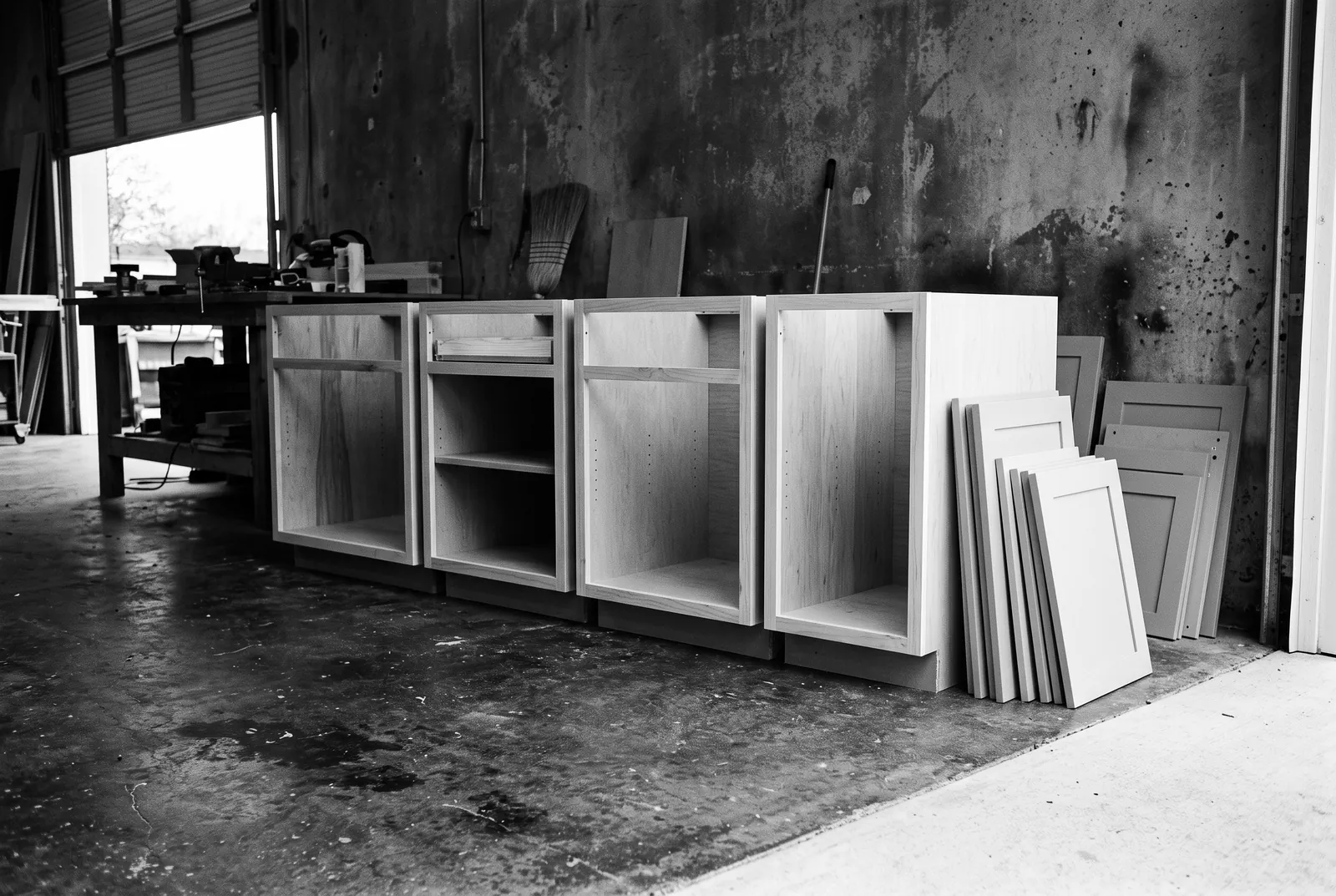
The formaldehyde limit on each cabinet material
Since June 1, 2018, and with a few exemptions, federal rules set a formaldehyde limit for each of the three composite woods, and it applies "regardless of whether the composite wood product is in the form of a panel, a component part, or incorporated into a finished good" (EPA formaldehyde standards, 40 CFR 770.10). The table below sets them out.
California's rule leaves some materials out. Its definition of composite wood "does not include hardboard, structural plywood," structural panels, structural composite lumber or oriented strand board (California Code of Regulations, title 17, section 93120.1). The rules name three materials: hardwood plywood, particleboard and MDF (California Air Resources Board, Composite Wood Products Program).
The same state rule names flooring products among its finished goods, which the flooring and backsplash page covers.
Get a written price
Free to you. The contractor calls to set a visit.
| Material | Federal limit | Set by |
|---|---|---|
| Hardwood plywood, veneer or composite core | 0.05 ppm | 40 CFR 770.10(b) |
| Particleboard | 0.09 ppm | 40 CFR 770.10(b) |
| Medium density fiberboard (MDF) | 0.11 ppm | 40 CFR 770.10(b) |
| Thin MDF, 8 millimeters or less | 0.13 ppm | 40 CFR 770.10(b) |
What the label on a finished cabinet has to say
A cabinet that contains composite wood is a finished good, and its maker has to label it. "The label must include, at a minimum, in legible English text, the fabricator's name, the date the finished good was produced (in month/year format), and a statement that the finished goods are TSCA Title VI compliant" (EPA labeling rule, 40 CFR 770.45). With written consent, the maker may put a later seller's name there in place of its own.
The label can go on every item or on every box. Importers, distributors and retailers "must leave intact labels on finished goods," and when a finished good is not labeled one by one, the seller has to keep a copy of the label and give the information to a customer who asks (EPA labeling rule, 40 CFR 770.45).
Under the federal rule, a label may also say the panels were made with no added formaldehyde or ultra low emitting formaldehyde resins, if that is accurate. The Air Resources Board's own guidance says a maker using those resins "may elect to simply label their product as Phase 2 compliant," so a plain label does not rule them out (California Air Resources Board consumer FAQ).
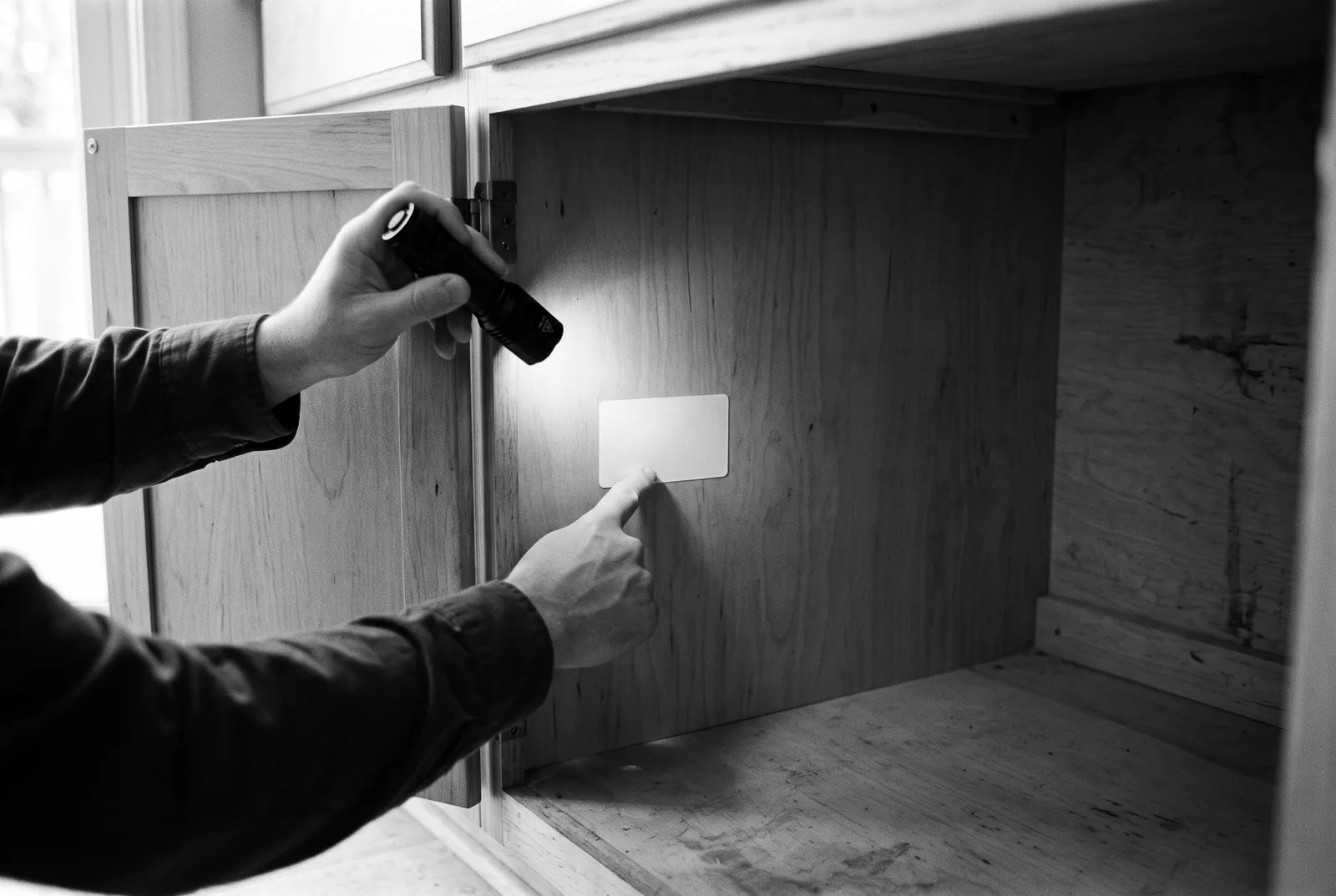
The California marking, and why a federal one is enough
The Air Resources Board names cabinets and countertops among the finished goods its rule covers, which "meet stringent formaldehyde emission standards and be labeled as such" (California Air Resources Board, Composite Wood Products Program).
A label reading "California 93120 Compliant for Formaldehyde" or "California Phase 2 Compliant" means the product meets those limits. The Board also says "California accepts products only labeled as being TSCA Title VI compliant, because requirements of the state and federal regulations are very similar," and that every product must now meet Phase 2 (California Air Resources Board consumer FAQ).
The state rule has its own label text for fabricators: a stamp, tag, sticker or bar code on every finished good or every box, with the fabricator's name, the date it was produced and a marking that the wood meets the Phase 1 or Phase 2 limits (California Code of Regulations, title 17, section 93120.7). The federal label spells out the month and year format; the two are close, not identical.
When the cabinet in front of you has no label
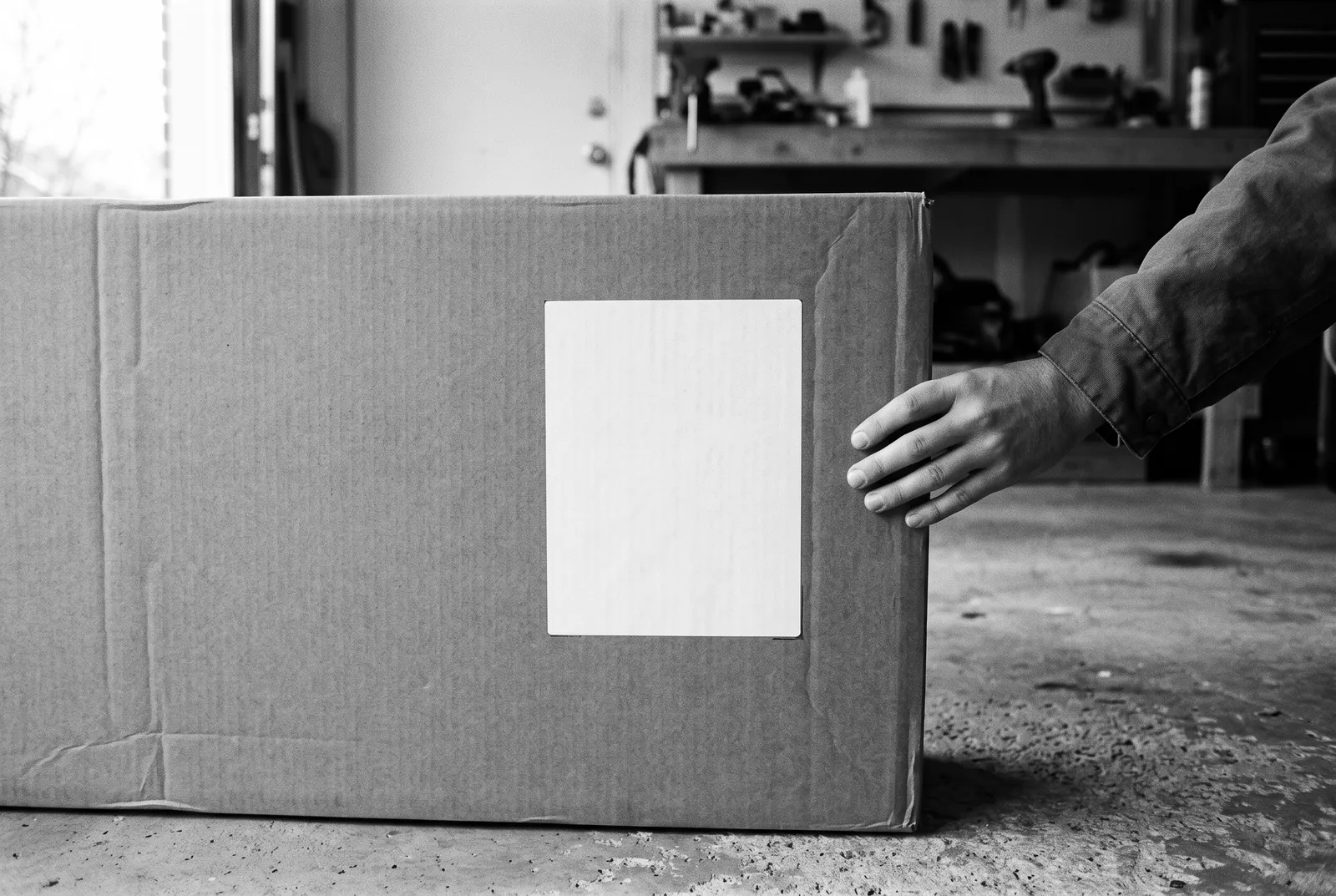
The Air Resources Board is direct about it: "if you do not see a label on the product, it does not necessarily mean that it is not a compliant product." Fabricators may label the shipping box instead, and "you may ask your retailer for verification" (California Air Resources Board consumer FAQ).
Doors and drawer fronts bought on their own follow the same logic. Federal rules say "Component parts that are sold directly to consumers are considered finished goods" (EPA definitions, 40 CFR 770.3), so an unfinished MDF door sold to a homeowner is labeled like a whole cabinet.
Very small pieces are the exception. A finished good whose composite wood face is 144 square inches or less needs no label, unless it is "designed to be used in combination or in multiples to create larger surfaces, finished goods, or component parts" (EPA labeling rule, 40 CFR 770.45). That skips the label only; the piece still has to meet the limits.
Cabinets built in the house
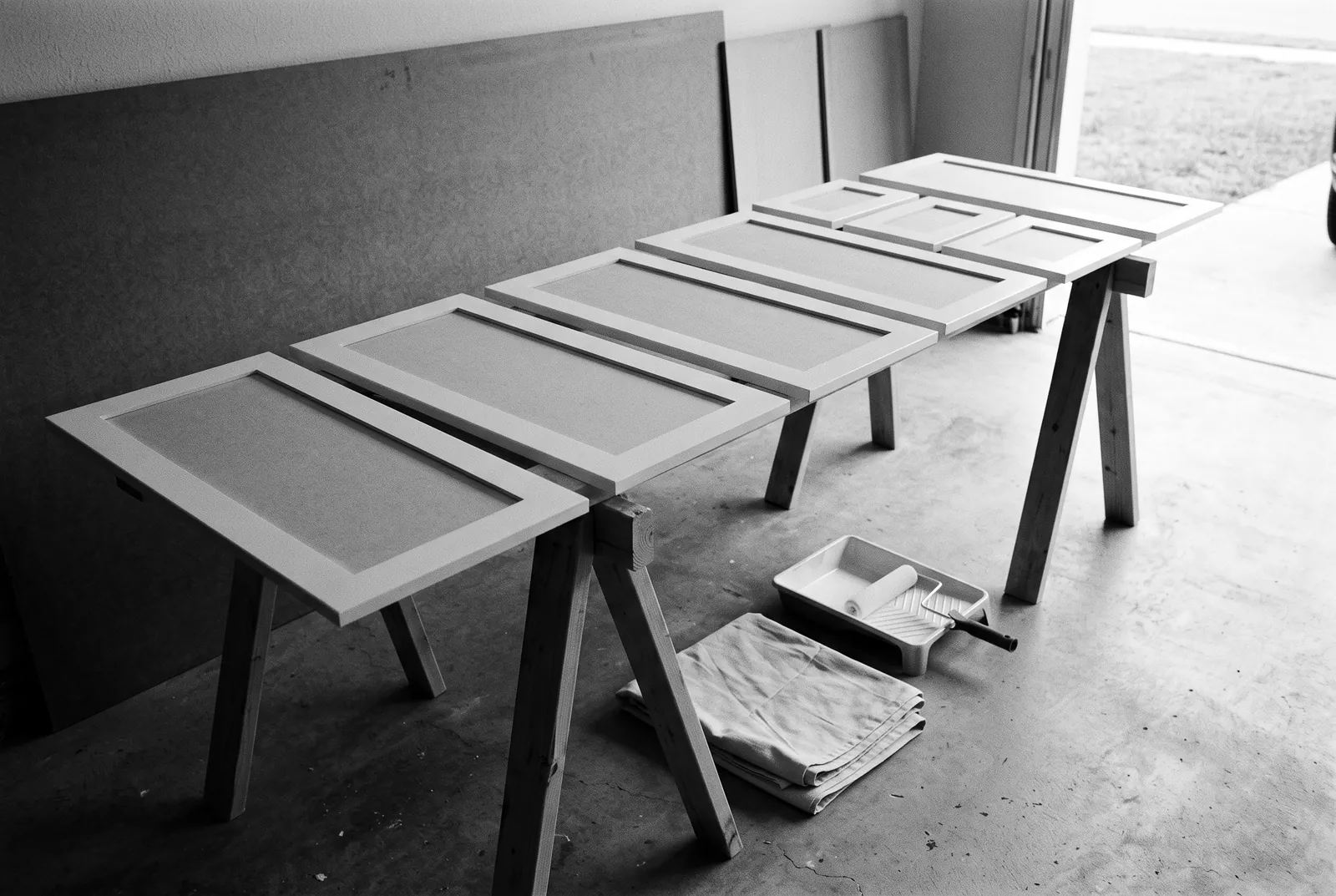
A cabinet built on site is not a finished good under the federal rule: "Site-built buildings or other site-built real property improvements are not considered finished goods." Under the same rule a remodeler does not become a fabricator, because "persons or entities in the construction trades are not fabricators by renovating or remodeling buildings" (EPA definitions, 40 CFR 770.3). California's own definitions carry no such exception (California Code of Regulations, title 17, section 93120.1).
So a cabinet made in a shop arrives with a finished good label, and one assembled in the kitchen does not. The panels it is cut from still have to meet the same limits, and each panel or bundle is labeled with the producer's name, the lot number, the certifier's number and a statement that it is TSCA Title VI certified (EPA labeling rule, 40 CFR 770.45). For built in place work, the panel labels are the paperwork to ask about (EPA formaldehyde standards, 40 CFR 770.10).
In a house still under its builder warranty, the Saugus page covers what that law says about cabinets and later changes.
Next in the sequence
Keep reading
What people ask about the label
Where is the formaldehyde label on a kitchen cabinet?
On the cabinet itself or on the box it shipped in; the maker may do either. It names a responsible company, usually the maker, gives the month and year it was made, and says TSCA Title VI compliant. If you cannot find it, the seller has to keep a copy and share it on request (EPA labeling rule, 40 CFR 770.45).
Does a cabinet labeled only TSCA Title VI meet California's rule?
Yes. The Air Resources Board says California accepts products labeled only as TSCA Title VI compliant, because the state and federal rules are very similar (California Air Resources Board consumer FAQ).
Can I buy unfinished cabinet doors and drawer fronts to paint myself?
Yes, and when they are sold straight to you the federal rule treats them as finished goods, so an MDF door larger than 144 square inches carries the same kind of label as a whole cabinet (EPA definitions, 40 CFR 770.3, 770.45).
Why do new cabinets smell, and what helps?
The Air Resources Board says "just because a product smells, it doesn't mean that it is off-gassing formaldehyde," since finishes smell too. It suggests fresh air and fans, and says "You may also leave your new product(s) in the garage for a few days to let it off-gas before bringing it inside," because heat and humidity raise emissions (California Air Resources Board consumer FAQ).
Sources
Every rule and figure on this page was read at the regulation, agency page or survey that states it, in September 2026. The page names no brand, maker or store, and it makes no health claim beyond the agencies' own words.
- 12026 U.S. Houzz Kitchen Trends Study, Houzz (PDF), survey of 1,780 Houzz users
- 2Title 40, Code of Federal Regulations, section 770.10, formaldehyde emission standards
- 3California Code of Regulations, title 17, section 93120.1, definitions for composite wood products
- 4Title 40, Code of Federal Regulations, section 770.45, labeling
- 5Composite Wood Products Consumer FAQ, California Air Resources Board
- 6Composite Wood Products Program, California Air Resources Board
- 7California Code of Regulations, title 17, section 93120.7, labeling by fabricators
- 8Title 40, Code of Federal Regulations, section 770.3, definitions